If you paused mid sentence wondering whether to write “courtesy” or “curtesy,” you are not alone. These two words look almost identical, sound the same out loud, and trip up even confident writers. The good news is that the answer is simple once you know the small but important difference between them.
Table of Contents
Quick Answer
Courtesy Or Curtesy Meaning
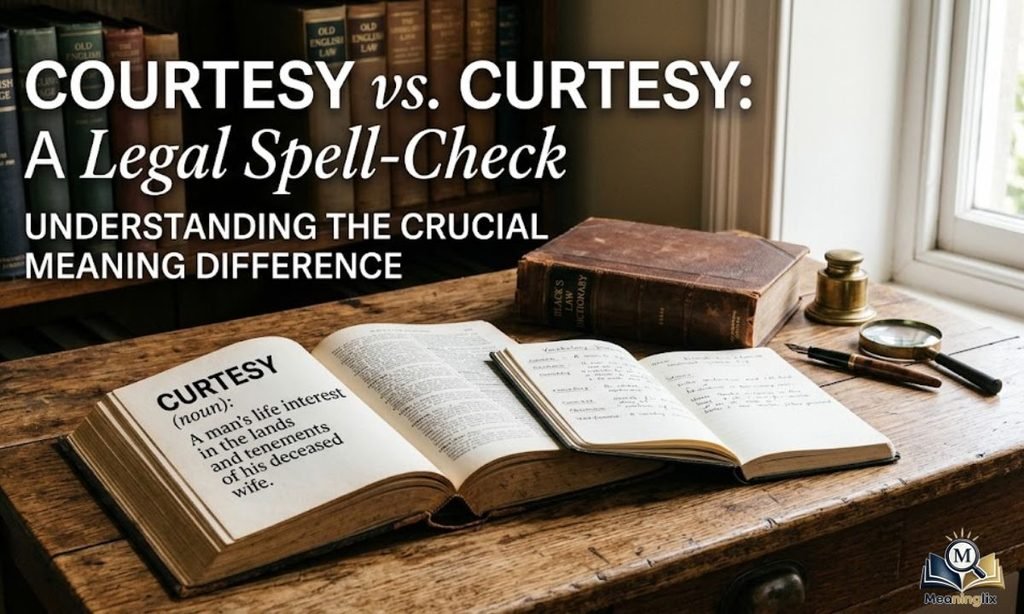
In almost every situation, the word you want is courtesy. It means politeness, respect, or a kind gesture toward someone else. “Curtesy” is a real word too, but it belongs to old legal language and has nothing to do with manners.
Courtesy Spelling Courtesy Or Curtesy
The correct everyday spelling is courtesy, spelled with “our” in the middle: c o u r t e s y. If you drop that “our,” you get “curtesy,” which is a completely different word with a completely different meaning.
Simple Origin Or Background Explanation
“Courtesy” traces back to the word “court,” referring to the households and gatherings of kings, nobles, and royal officials. People at court were expected to behave with refined manners, so “courteous” behavior became the standard for polite conduct. Over centuries, that idea settled into the modern word “courtesy,” meaning respectful and considerate behavior.
What About “Curtesy”?
“Curtesy” developed along a separate path in English common law. It referred to a husband’s legal right, under certain historical conditions, to control or inherit property that belonged to his deceased wife. This term is almost never used today outside legal history and older law texts.
Courtesy Or Curtesy Car
If you are talking about a temporary replacement vehicle offered by a dealership or repair shop while your car is being serviced, the correct term is a courtesy car. “Curtesy car” is a spelling mistake, not an alternate term.
Courtesy Or Curtesy Meaning
When someone asks about the meaning behind this pair of words, they are almost always asking about courtesy, the everyday word for politeness. “Curtesy” carries a narrow legal meaning that rarely appears in normal conversation.
Courtesy Or Curtesy In A Sentence
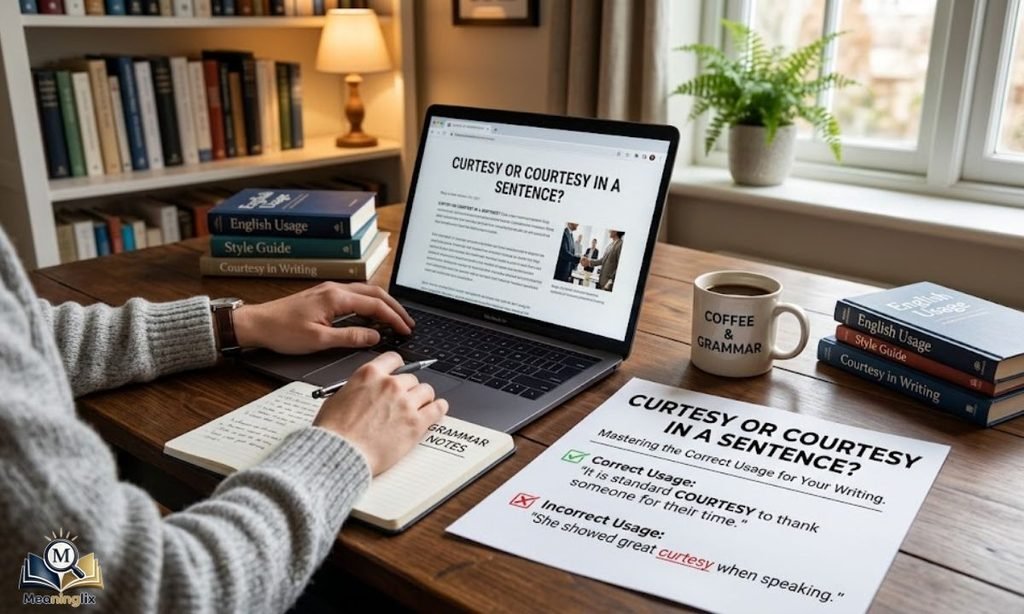
Correct: “She held the door open as a small courtesy to the person behind her.” Incorrect: “She held the door open as a small curtesy to the person behind her.”
Courtesy Or Curtesy Call
A short, polite visit or phone call, often made out of respect rather than necessity, is called a courtesy call. This phrase shows up often in business and diplomatic contexts.
Courtesy Of Someone
The phrase “courtesy of” means something was provided by, or thanks to, a particular person or organization. For example: “The free samples were provided courtesy of the local bakery.”
Courtesy Or Curtesy Synonym
Common synonyms for courtesy include politeness, civility, respect, consideration, and good manners. There is no widely used synonym for “curtesy,” since it is a narrow legal term rather than a general vocabulary word.
| Don’t Miss These Articles |
| Carmel or Caramel? Discover the Correct Spelling Now! |
| Wifes or Wives: Learn the Correct Spelling Fast |
| How Long Until 3 PM? Get Exact Time Left! |
Clear Explanation Of The Difference
What Does “Courtesy” Mean?
Courtesy refers to polite, respectful, and considerate behavior toward other people. It can describe an attitude, a specific act of kindness, or a favor extended out of goodwill rather than obligation.
What Does “Curtesy” Mean?
Curtesy is a historical legal term describing a husband’s right, under old common law, to property connected to his deceased wife under specific inheritance conditions. It has no connection to politeness or manners.
Key Point
These two words are homophones, meaning they sound alike when spoken, but they are spelled differently and mean entirely different things. Only one of them belongs in everyday writing.
Curtesy Vs Courtesy
Side by side, the difference comes down to context. Courtesy belongs in emails, conversations, customer service, and daily life. Curtesy belongs in legal history books and almost nowhere else.
Comparison Table Courtesy Or Curtesy
| Feature | Courtesy | Curtesy |
| Meaning | Politeness, respect, kindness | Old legal property right |
| Common use | Everyday writing and speech | Legal history texts |
| Modern relevance | Very common | Extremely rare |
| Spelling clue | Contains “our” | Missing “our” |
| Correct for manners | Yes | No |
Which One To Use And When
Use “Courtesy” When:
- Describing polite behavior or good manners
- Thanking someone for a favor or kind gesture
- Referring to a courtesy call, courtesy car, or similar phrase
- Writing emails, essays, articles, or everyday messages
Do Not Use “Curtesy”
Unless you are specifically writing about historical English property law, avoid “curtesy” entirely. Using it in place of “courtesy” reads as a spelling error to most readers, including teachers, editors, and hiring managers.
Simple Rule
If the sentence is about being polite, kind, or respectful, the word is courtesy. There is no exception to this rule in modern everyday writing.
Common Mistakes People Make Courtesy Or Curtesy

1. Spelling It As “Curtesy”
This is the most frequent mistake, usually caused by dropping the “our” without realizing the word changes meaning entirely.
2. Pronunciation Confusion
Because both words sound nearly identical when spoken, writers sometimes type the version that looks shorter or feels more familiar from muscle memory.
3. Forgetting The “Our”
Fast typing often skips small internal letter groups, and “our” is an easy one to miss in a word like courtesy.
4. Typing Quickly
Autocorrect does not always catch this error, since “curtesy” is a real word in the dictionary, so spellcheck tools may let it pass without a warning.
Everyday Real Life Examples
In Emails
“Thank you for your courtesy in rescheduling our meeting on such short notice.”
In News
News reports often describe a “courtesy call” between officials, or note that a service was offered “courtesy of” a sponsor or donor.
On Social Media
“Shoutout to the barista who remembered my order, that’s real courtesy.”
In Daily Conversation
“He returned my lost wallet, which I thought was a real act of courtesy.”
Incorrect Examples (For Learning)
- “I appreciate your curtesy.” ❌
- “The hotel offers a curtesy shuttle.” ❌
- “Thanks for the curtesy call.” ❌
Each of these should use “courtesy” instead.
Short Learning Section For Students And Beginners
Trick 1: “Our” Inside
Remember that courtesy contains the word “our.” If you can spot “our” in the middle of the word, you have spelled it correctly.
Trick 2: Think Of “Court”
Courtesy starts with “court,” the same word connected to royal courts and polite behavior. This link can help the spelling stick in memory.
Trick 3: One Safe Choice
When in doubt, always default to courtesy. It is correct in nearly every situation you will ever write in.
Practice Sentences
- “Please extend the same courtesy to every customer.”
- “The airline offered a courtesy meal during the delay.”
- “Good manners and courtesy go hand in hand.”
Frequently Asked Questions
Which Is A Courtesy?
A courtesy is any polite act, gesture, or favor shown to another person, such as holding a door open or offering a helpful reminder.
Is Curtesy An Outdated Term?
Yes, curtesy is considered an outdated legal term today. It is rarely used outside historical discussions of common law property rights.
What Does Curtesy Mean?
Curtesy refers to a husband’s historical legal right, under old common law, connected to property belonging to his deceased wife.
Is It Courtesy Or Courtesy?
The correct spelling in everyday English is courtesy, not curtesy. Unless you are writing about historical property law, courtesy is always the right choice.
Conclusion
The confusion between courtesy and curtesy comes down to one missing letter combination, but the meanings are worlds apart. Courtesy is the word for politeness, respect, and everyday kindness, while curtesy belongs to old legal history and almost never appears in modern writing.
Keep the “our” in mind, and you will never misspell this word again.

Alisha Lehmann is the founder and author of Meaninglix. She specializes in explaining word meanings, internet slang, abbreviations, grammar, and English expressions in simple, accurate language. Her goal is to help readers improve their vocabulary and communicate confidently through clear, well-researched, and easy-to-understand content.
1 thought on “Courtesy Or Curtesy? Get The Spelling Right Today”