If you have ever read a phrase like “deafening silence” and wondered why it works, or noticed how a writer places two opposite characters side by side to make a point, you have already run into the debate of oxymoron vs. juxtaposition. These two literary devices get mixed up constantly, even by experienced writers and students, because both deal with contrast. But they are not the same thing, and knowing the difference will instantly sharpen your writing, your reading comprehension, and your grasp of English grammar and rhetoric.
This guide breaks down oxymoron vs. juxtaposition in plain English, with a comparison table, real examples, and answers to the questions people actually search for in 2026.
Table of Contents
Quick Answer: Oxymoron vs Juxtaposition
Here is the short version. An oxymoron is a figurative language device that combines two contradictory words to create a single, compact phrase, such as “living dead” or “bitter sweet.” Juxtaposition is a broader rhetorical device where two contrasting ideas, characters, images, or situations are placed next to each other, without necessarily combining into one phrase. In short, an oxymoron is a small, self-contained example of juxtaposition, but juxtaposition is much wider in scope and can span an entire scene, paragraph, or story. That is the core of the oxymoron vs. juxtaposition comparison, and everything below expands on it.
Juxtaposition vs Oxymoron vs Paradox
People often throw a third term into this mix: paradox. Understanding oxymoron vs juxtaposition vs paradox together makes the distinctions much clearer.
- Oxymoron: Two contradictory words placed directly together, forming a short phrase (jumbo shrimp, organized chaos).
- Juxtaposition: Two contrasting elements placed near each other for comparison, which can be words, images, characters, or scenes (a mansion built next to a slum).
- Paradox: A statement that seems self-contradictory or illogical at first, but reveals a deeper truth on closer thought (less is more).
All three rely on contrast in writing, but they operate at different levels. An oxymoron works at the word level. Juxtaposition works at the idea or scene level. A paradox works at the level of logic and meaning. When you compare oxymoron vs. juxtaposition vs. paradox side by side, the pattern becomes obvious: they get progressively larger in scale and more conceptual in nature.
Click Here To Read another Grammar
Oxymoron vs Juxtaposition Comparison Table
| Feature | Oxymoron | Juxtaposition |
| Definition | Two contradictory words combined into one phrase | Two contrasting ideas or elements placed side by side |
| Scope | Word or short phrase level | Can span a phrase, sentence, scene, or entire work |
| Purpose | Creates emphasis, humor, or irony in a compact way | Highlights contrast to deepen meaning or theme |
| Example | Deafening silence | A wealthy family living next door to a struggling one |
| Structure | Fixed, tight, usually two words | Flexible, can involve multiple sentences or images |
| Common use | Poetry, everyday speech, headlines | Fiction, film, art, persuasive writing |
| Relationship | A specific, condensed type of contrast | The umbrella category that includes oxymoron |
This table is the fastest way to visualize the oxymoron vs. juxtaposition relationship at a glance, and it is worth bookmarking if you write or teach English grammar regularly.
What Is an Oxymoron?
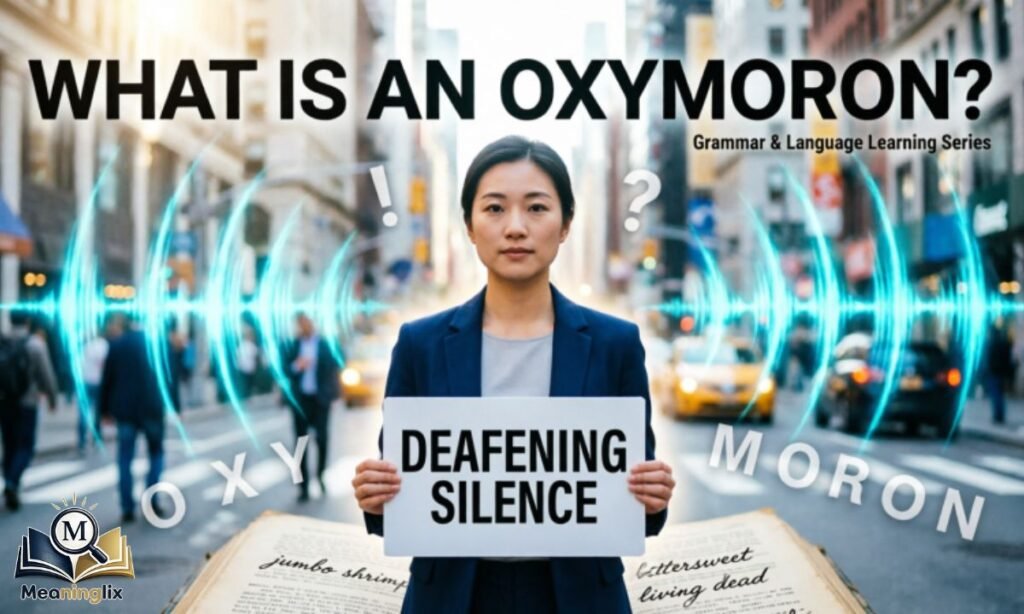
An oxymoron is a rhetorical device that pairs two words with opposite or contradictory meanings to create a new, often memorable expression. The word itself comes from Greek, combining “oxys” (sharp) and “moros” (foolish), which fittingly describes a phrase that sounds foolish on the surface but is actually quite sharp in meaning.
Common examples include:
- Deafening silence
- Act naturally
- Original copy
- Pretty ugly
- Living dead
Oxymorons work because the tension between the two words forces the reader to pause and think. That small mental jolt is what makes them memorable, whether in poetry, advertising slogans, or casual conversation. Writers use oxymorons to add irony, humor, or emotional depth without needing extra words. This efficiency is exactly why the term keeps coming up whenever people search for contrasting ideas in short form.
When discussing oxymoron vs. juxtaposition, it helps to remember that an oxymoron is intentionally compact. You will almost never see a proper oxymoron stretched across a full sentence, because its power comes from the immediate collision of two opposing words.
What Is Juxtaposition?
Juxtaposition is a literary device where two or more contrasting elements are placed close together so the reader naturally compares them. Unlike an oxymoron, juxtaposition does not need to combine words into a single phrase. It can involve people, settings, tones, colors, or entire storylines.
Examples of juxtaposition include:
- A soldier writing a gentle letter home moments before a battle
- A luxury car parked outside a rundown building
- A joyful wedding scene cut against a somber funeral scene in a film
- Describing a character as calm on the outside while chaotic on the inside
Juxtaposition is a favorite tool in fiction, film, photography, and persuasive essays because it lets the audience draw their own conclusions from contrast rather than being told directly what to think. A skilled author might juxtapose wealth and poverty in the same neighborhood to comment on inequality, without ever using an oxymoron at all.
This is the biggest structural difference in the oxymoron vs. juxtaposition discussion. Juxtaposition is not limited by grammar or word count. It is a technique of arrangement, while an oxymoron is a technique of word choice.
Key Differences Between Oxymoron and Juxtaposition
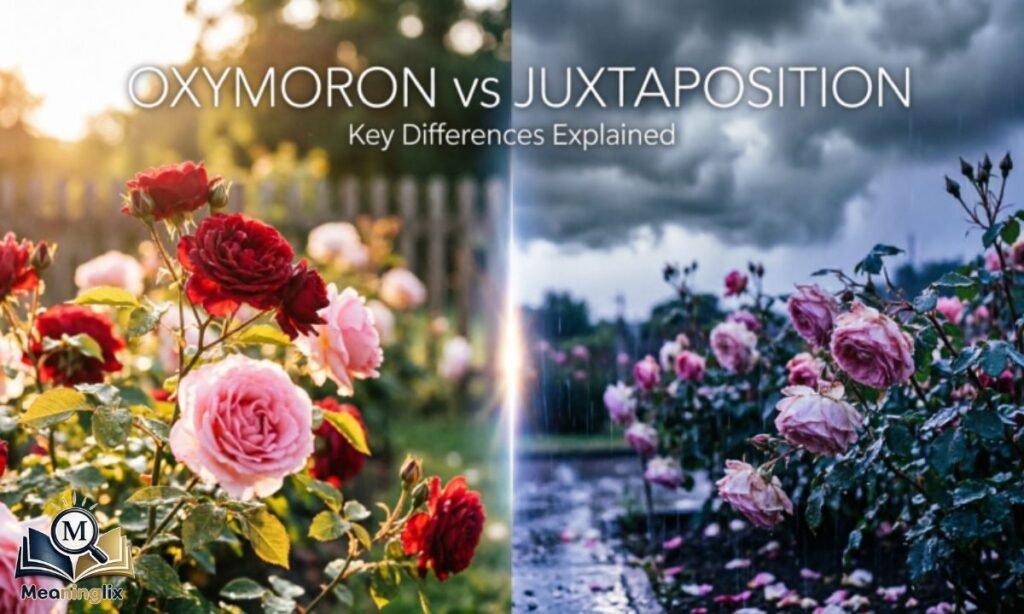
To fully settle the oxymoron vs. juxtaposition debate, here are the core distinctions worth remembering:
- Scale: An oxymoron lives inside two or three words. Juxtaposition can stretch across sentences, scenes, or entire chapters.
- Combination vs. placement: An oxymoron fuses opposite words into one unit. Juxtaposition simply places contrasting elements near each other without merging them.
- Purpose: Oxymorons usually aim for irony, wit, or emphasis in a flash. Juxtaposition usually aims to build meaning gradually through comparison.
- Category relationship: Every oxymoron is technically a form of juxtaposition, since it juxtaposes two opposite words. However, not every example of juxtaposition is an oxymoron, since most juxtapositions involve full ideas rather than single contradictory words.
- Where you find them: Oxymorons show up in headlines, slogans, and everyday speech. Juxtaposition shows up in storytelling, cinematography, visual art, and argumentative writing.
A common mistake writers make is assuming any contrast counts as an oxymoron. If the contrast involves two full concepts, scenes, or characters rather than two single words merged together, it is juxtaposition, not an oxymoron. Keeping this distinction in mind instantly improves how confidently you can analyze literature or craft your own contrast in writing.
Another overlooked detail: some phrases that look like oxymorons are actually just juxtaposition at the phrase level, especially when the two contrasting words are separated by other words rather than sitting directly next to each other. True oxymorons are tight and immediate, while looser contrasts within a sentence lean closer to general juxtaposition.
Frequently Asked Questions
What is an example of juxtaposition and oxymoron?
A simple oxymoron example is “bitter sweet,” where two opposite words combine into one idea. A juxtaposition example would be describing a peaceful garden located right beside a noisy, crowded highway. Both rely on contrast, but the oxymoron compresses it into one phrase while the juxtaposition spreads it across a full description.
Is sweet and sour a juxtaposition?
Yes, “sweet and sour” is generally considered a juxtaposition because it places two contrasting flavors side by side for comparison, rather than fusing them into a single compound word. If it were written as one merged descriptive term for a single taste, it would lean closer to an oxymoron. In most contexts, though, “sweet and sour” functions as a juxtaposition of two distinct qualities.
What are 5 examples of oxymorons?
Five common oxymoron examples are: deafening silence, act naturally, original copy, pretty ugly, and living dead. Each one pairs two contradictory words into a single tight phrase, which is the defining feature that separates an oxymoron from broader juxtaposition.
Is bittersweet a juxtaposition?
Bittersweet is more accurately classified as an oxymoron because it fuses two opposite qualities, bitter and sweet, directly into one compound word. While it does involve contrast, which is the shared foundation of both devices, its compressed, single word structure places it firmly on the oxymoron side of the oxymoron vs. juxtaposition comparison rather than the broader juxtaposition category.
Conclusion
The oxymoron vs. juxtaposition comparison really comes down to scale and structure. An oxymoron is a tight, two word contradiction built for quick impact, while juxtaposition is a flexible device that places contrasting ideas, images, or characters near each other to build meaning over a larger stretch of writing. Every oxymoron technically counts as a form of juxtaposition, but most juxtaposition is far too broad to be called an oxymoron.
Once you understand oxymoron vs. juxtaposition clearly, you will start noticing both devices everywhere, from song lyrics and movie scenes to news headlines and classic novels. The next time you spot a contradictory phrase or a scene built in contrast, you will know exactly which device is doing the work, and why it makes the writing more memorable.

Alisha Lehmann is the founder and author of Meaninglix. She specializes in explaining word meanings, internet slang, abbreviations, grammar, and English expressions in simple, accurate language. Her goal is to help readers improve their vocabulary and communicate confidently through clear, well-researched, and easy-to-understand content.
1 thought on “Oxymoron vs. Juxtaposition: What’s the Difference? Perfect Examples 2026”