If you have ever paused mid-sentence and wondered whether to write “grately” or “greatly,” you are not alone. The two words look almost identical and sound even closer when spoken quickly. Here is the short answer: greatly is correct, and grately is not a real English word.
The confusion happens because “great” and “grateful” both exist, so “grately” seems like it should fit the pattern too. It does not. Keep reading to see exactly why it greatly wins, how to use it correctly, and how to stop the mistake for good.
Table of Contents
Which One Is Actually Correct?
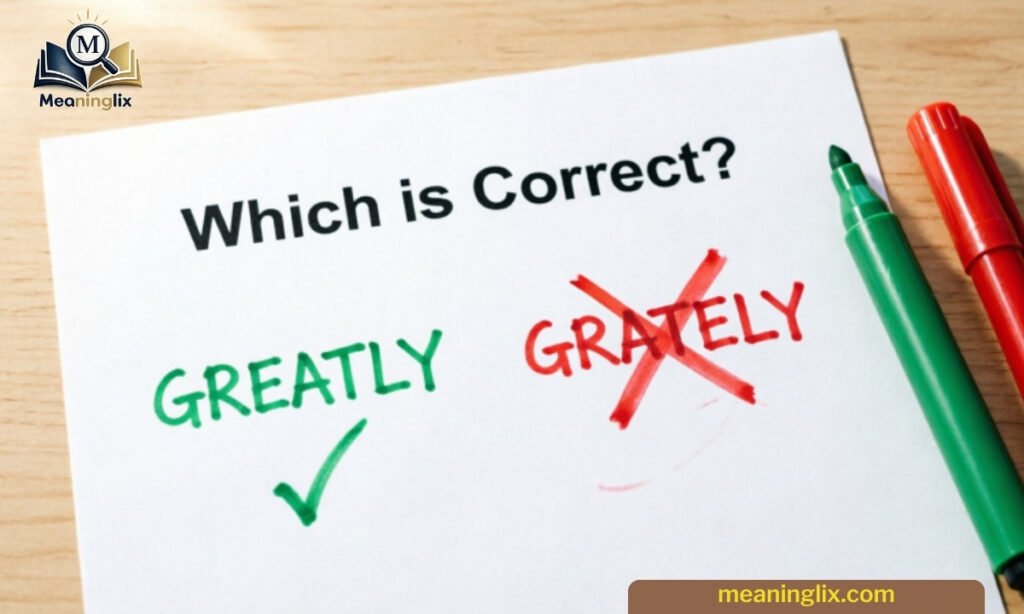
Greatly is the only accepted spelling. It is a standard adverb found in every major English dictionary. Grately is a misspelling with no accepted definition, and you will not find it as a real entry in Merriam-Webster, Oxford, or any other authoritative source.
Here are two quick examples to lock in the difference:
Correct: “Your support is greatly appreciated.”
Incorrect: “Your support is grately appreciated.”
If a spell checker or grammar tool flags “grately,” trust it. There is no exception where the “e” version is right.
Read Compression : Devide or Divide
What Does “Greatly” Mean?

Greatly is an adverb that means to a large extent, very much, or by a considerable amount. It shows the degree or intensity of an action, feeling, or change. When something happens “greatly,” it happens in a big, noticeable way rather than a small or minor one.
For example:
- Sales greatly increased after the new launch.
- Her mood greatly improved once the exam was over.
- The design has greatly changed since last year.
In each case, “greatly” tells you how much something increased, improved, or changed.
Read Grammar : Okay or OK
Why Do People Write “Grately” Instead?
The mix-up almost always comes down to one of these reasons:
- 🗣️ Pronunciation. In fast, casual speech, “greatly” can sound like it has no second “e,” which nudges people toward “grately.”
- ⌨️ Typing speed. A dropped letter during quick typing is easy to miss, especially in emails and texts.
- 🧩 Pattern confusion. Words like “lately” and “stately” follow a similar rhythm, so “grately” feels like it should belong to the same family.
- 🤝 Mixing it up with “grateful.” Since “grateful” is a real word, some writers assume “grately” must be too.
None of these reasons make “grately” correct. They just explain why the typo is so common.
How “Greatly” Is Built
Understanding the word formation makes the spelling easy to remember for good.
English forms many adverbs by adding -ly to an adjective. The adjective here is great, and the full word stays exactly as it is: great + ly = greatly. Nothing gets removed or shortened.
Compare it to other adverbs built the same way:
- quiet → quietly
- soft → softly
- right → rightly
“Grately” would require dropping a letter from “great,” which is not how this pattern works. That single missing letter is the whole mistake.
Quick Comparison Table
| Term | Correct? | Meaning | Typical Use | Example |
| Greatly | ✅ Yes | To a large extent; very much | Formal and casual writing, emails, essays | “We greatly value your feedback.” |
| Grately | ❌ No | No accepted meaning | Not used in any standard writing | “We grately value your feedback.” (incorrect) |
Real-Life Examples of “Greatly” in Use

Everyday conversation: “I greatly enjoyed catching up with you last night.”
Workplace communication: “Your quick response is greatly appreciated as we finalize the report.”
Text message: “That helped greatly, thank you!”
Academic writing: “The results greatly support the original hypothesis.”
Formal writing: “The policy change has greatly affected small business owners across the region.”
In every context, from casual texts to formal reports, only “greatly” fits.
Read Also : Anytime or Any Time
The Mistake Readers Make Most Often
The most common error is writing “grately appreciated” instead of “greatly appreciated.” This phrase shows up constantly in professional emails, thank-you notes, and cover letters, which is exactly why the typo stands out so much.
Correct: “Your patience is greatly appreciated.” Incorrect: “Your patience is grately appreciated.”
A simple way to remember it: think of the word “great” first, then just add “ly.” If you cannot find “great” sitting inside the word, the spelling is probably wrong.
Grately vs. Greatly: What About “Gravely”?
Some writers also mix up “greatly” with gravely, which is a different word entirely. Gravely means “in a serious or severe way,” as in “he was gravely injured.” Greatly means “to a large extent,” as in “he greatly improved.”
If your sentence is about seriousness or danger, use gravely. If it is about the degree or amount, use it greatly. Neither one is ever spelled “grately.”
How to Avoid This Mistake Going Forward
- Say the root word first. Think “great,” then add “-ly” at the end.
- Read your sentence back slowly. Fast typing is the biggest cause of this typo.
- Let spell check do its job. Most tools will underline “grately” automatically.
- Compare it to words you already know, like “greatly” alongside “lately” and “quietly,” so the correct spelling feels familiar.
Once the pattern clicks, you will not have to second-guess this word again.
Frequently Asked Questions
Is “grately” ever grammatically correct?
No. “Grately” is not recognized in any standard English dictionary and has no accepted meaning. It is always a misspelling of “greatly,” regardless of the context or how formal the writing is.
What part of speech is “greatly”?
“Greatly” is an adverb. It modifies verbs and adjectives to show degree or extent, such as in “greatly improved” or “greatly admired.”
Is “greatly appreciated” the same as “grately appreciated”?
They are meant to express the same idea, but only “greatly appreciated” is correct. “Grately appreciated” is simply a spelling error and should be corrected to “greatly appreciated” in any writing.
What is a simple trick to remember the correct spelling?
Picture the word “great” first, then add “-ly” to the end: great + ly = greatly. If the word “great” is not clearly inside the spelling, it is not correct.
Final Takeaway
When you are deciding between grately or greatly, the choice is simple: greatly is correct, and grately is not a word. Greatly comes directly from “great” plus “-ly,” and it shows up correctly in everyday conversation, workplace emails, and formal writing alike.
The next time you type this word, picture “great” first and the correct spelling will follow naturally.

Alisha Lehmann is the founder and author of Meaninglix. She specializes in explaining word meanings, internet slang, abbreviations, grammar, and English expressions in simple, accurate language. Her goal is to help readers improve their vocabulary and communicate confidently through clear, well-researched, and easy-to-understand content.
1 thought on “Grately or Greatly: The Correct Spelling in 60 Seconds”