English learners and even native speakers often mix up propose vs purpose because the two words look similar and share a common root. But they play completely different roles in a sentence. One is an action word, and the other is a naming word. Understanding propose vs purpose properly can save you from awkward emails, confusing essays, and embarrassing mistakes during interviews or presentations.
In this guide, we will break down the propose vs purpose meaning, explore each word with real examples, and show you exactly how to use them correctly in daily conversation and writing.
Table of Contents
Propose vs purpose meaning
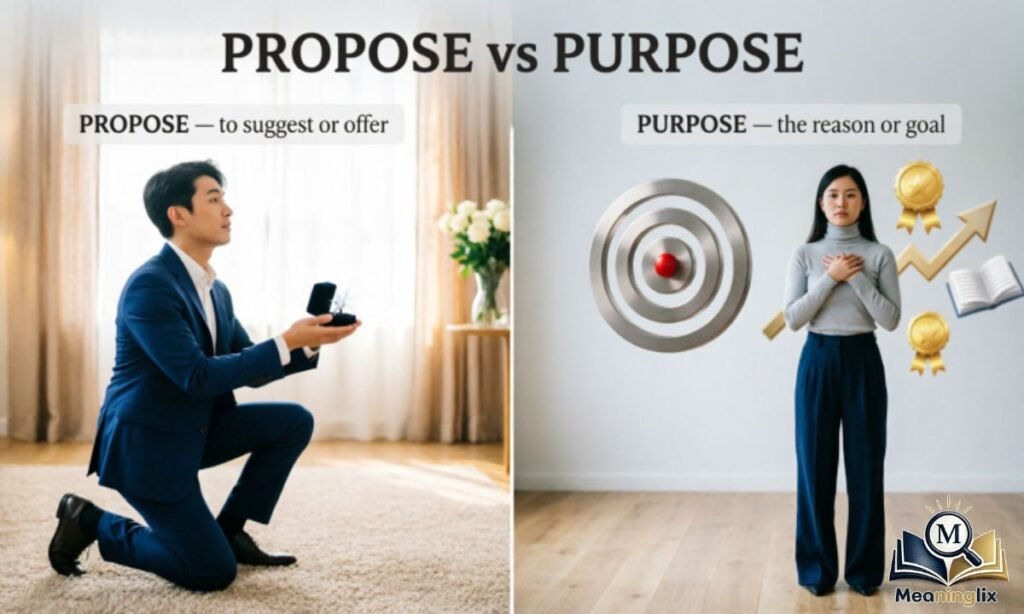
Propose is a verb that means to suggest an idea, plan, or action for consideration, or to formally ask someone to marry you. Purpose is a noun that refers to the reason something exists or the goal behind an action. In short, propose is about suggesting something, while purpose is about the intention or aim behind it.
Once you understand this core propose vs purpose meaning, the rest becomes much easier to remember.
Click Here To Read More Grammar
Understanding Propose: Definition, Usage, and Examples
The word propose comes from the Latin word “proponere,” meaning to put forward. As a verb, propose is used when someone puts forward an idea, plan, suggestion, or offer for others to consider or accept.
Below are the four most common ways propose is used in everyday English.
1. Suggesting Plans or Ideas
This is the most frequent use of propose. It means putting an idea on the table for discussion or approval.
Examples:
- The manager decided to propose a new marketing strategy during the meeting.
- She will propose a change to the project timeline tomorrow.
- The committee wants to propose three solutions to reduce costs.
2. Making Marriage Offers
Propose is also widely used in romantic contexts, referring to asking someone to marry you.
Examples:
- He plans to propose to his girlfriend this weekend.
- After five years together, they finally got engaged when he proposed on the beach.
- Many couples choose a special location to propose.
3. Offering Toasts
Another lesser known but common usage of propose is when someone offers a toast at an event or celebration.
Examples:
- The best man stood up to propose a toast to the newlyweds.
- Let us propose a toast to another successful year.
- She rose to propose a toast in honor of the retiring professor.
4. Planning or Intending
Propose can also mean intending to do something, similar to “plan to.”
Examples:
- How do you propose to finish this project by Friday?
- I propose we take a short break before continuing.
- The team proposed to launch the product in early 2026.
Understanding Purpose: Definition, Usage, and Examples
Purpose is a noun, and it refers to the reason behind an action, the goal someone is trying to achieve, or the underlying intent of something. Unlike propose, purpose does not describe an action. It describes the “why” behind an action.
Here are the three main ways purpose is used.
1. Aim or Intention
This is the most common meaning of purpose. It refers to the goal or objective of doing something.
Examples:
- The purpose of this report is to summarize last quarter’s sales.
- What is the purpose of this meeting?
- Her main purpose in life is helping underprivileged children.
2. Doing Something Deliberately
The phrase “on purpose” describes an action that is intentional rather than accidental.
Examples:
- He broke the vase on purpose to get attention.
- I did not do that on purpose, it was a mistake.
- She ignored the message on purpose because she was upset.
3. Determination and Resolve
Purpose can also describe a person’s sense of drive, motivation, or resolve.
Examples:
- After finding her career purpose, she felt more motivated than ever.
- He walked into the interview with a strong sense of purpose.
- Living with purpose helps people stay focused during difficult times.
Differences Between Propose & Purpose
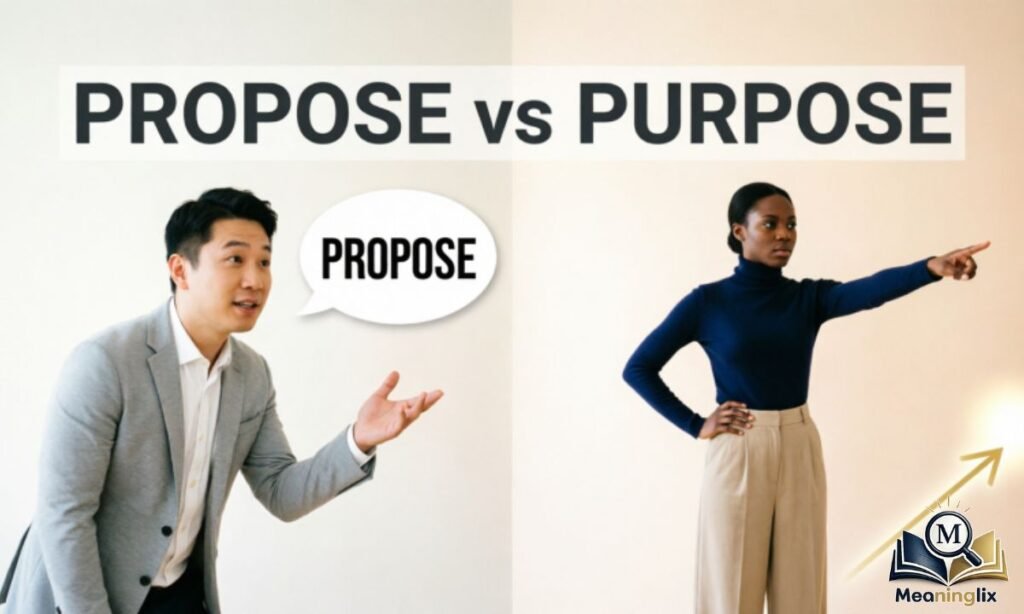
Understanding the grammatical difference between these two words makes it much easier to use them correctly. Here is a quick comparison table.
| Feature | Propose | Purpose |
| Part of Speech | Verb | Noun |
| Meaning | To suggest, offer, or intend | The reason or goal behind something |
| Common Contexts | Business ideas, marriage offers, toasts, plans | Aims, intentions, motivation, meaning |
| Example | She will propose a new idea. | The purpose of the plan is growth. |
| Related Forms | proposal, proposed, proposing | purposeful, purposely, purposeless |
This table highlights the key propose vs purpose distinction: one is an action, and the other is a concept or reason.
How to Use Propose vs Purpose Correctly in Sentences
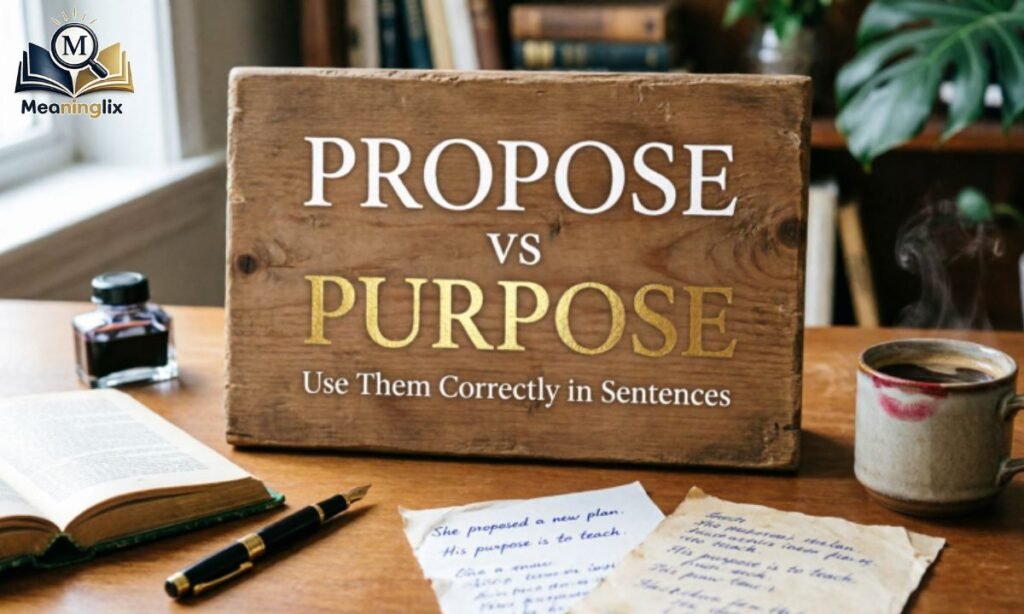
A simple trick to remember propose vs purpose is this: if the word is followed by an action or idea, it is likely propose. If the word describes a reason or goal, it is purpose.
Here are some practical example sentences that show correct usage side by side.
- Correct: The team will propose a new budget next week.
- Incorrect: The team will purpose a new budget next week.
- Correct: The purpose of the workshop is to train new employees.
- Incorrect: The propose of the workshop is to train new employees.
- Correct: He proposed to her during their vacation.
- Incorrect: He purposed to her during their vacation.
- Correct: Her purpose in joining the club was to make new friends.
- Incorrect: Her propose in joining the club was to make new friends.
Expert tip: If you can replace the word with “suggest” or “intend to do,” use propose. If you can replace it with “reason” or “goal,” use purpose. This small mental check works almost every time.
Common mistake: Many non-native speakers accidentally use “purpose” as a verb, saying things like “I purpose that we meet tomorrow.” This is grammatically incorrect. The correct verb form is always propose.
Another frequently overlooked detail is that purposely and purposefully are not identical. “Purposely” means intentionally, while “purposefully” means with determination or focus. Mixing these up is a subtle but common writing error, especially in professional documents and essays created around 2026 workplace communication trends, where clarity and precision in writing are increasingly valued due to AI powered grammar checks and content reviews.
Frequently Asked Questions
What is the difference between proposal and purpose?
A proposal is a noun that refers to a formal suggestion or plan presented for consideration, such as a business proposal. Purpose, on the other hand, refers to the reason or goal behind an action. A proposal often explains the purpose behind it, but the two words serve different grammatical roles.
What is the difference between proposed and propose?
Propose is the base verb form used for suggestions, plans, or intentions in the present tense, such as “I propose a new idea.” Proposed is the past tense form, used when the action has already happened, such as “He proposed a new idea yesterday” or “She proposed to her partner last year.”
What can I say instead of “propose”?
Depending on context, you can use words like suggest, recommend, offer, put forward, or pitch instead of propose. For marriage related contexts, alternatives include “ask someone to marry” or “pop the question.”
What does “to propose” mean?
“To propose” generally means to formally suggest an idea, plan, or action for others to consider. It can also mean to ask someone to marry you, or to intend or plan to do something in a specific way.
Conclusion
The confusion around propose vs purpose usually comes down to one simple fact: propose is a verb, and purpose is a noun. Propose is about suggesting, offering, or intending something, while purpose is about the reason or goal behind an action. Once you understand this core propose vs purpose meaning, you can confidently use both words in writing, conversation, business communication, and everyday English without hesitation.
Whether you are writing a business proposal, explaining your career purpose, or simply trying to improve your grammar, remembering the difference between propose vs purpose will make your communication clearer and more professional.

Alisha Lehmann is the founder and author of Meaninglix. She specializes in explaining word meanings, internet slang, abbreviations, grammar, and English expressions in simple, accurate language. Her goal is to help readers improve their vocabulary and communicate confidently through clear, well-researched, and easy-to-understand content.
1 thought on “Propose vs Purpose: Powerful Differences Explained 2026”