If you’ve ever paused mid-sentence wondering whether to write “grey” or “gray,” you’re not misremembering your spelling lessons. Both forms are correct. The confusion happens because English has two major dialects with two different habits.
The short answer: gray is the standard spelling in American English, while grey is standard in British English and most other English-speaking countries. Neither one is a typo; the right choice just depends on your audience.
Table of Contents
What Grey or Gray Actually Mean
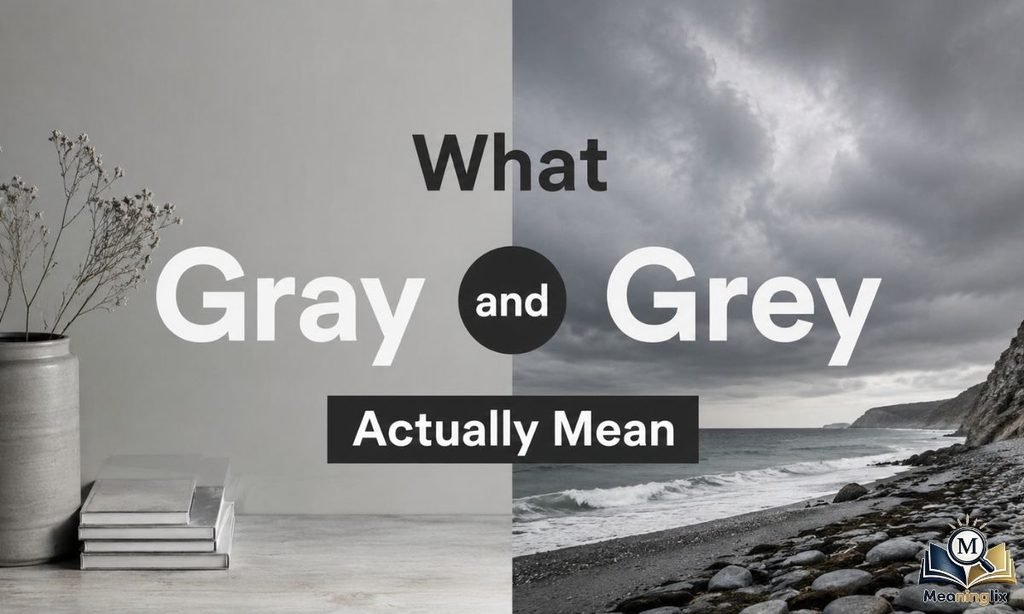
Both words describe the same thing: a neutral, achromatic color that sits between black and white, like the color of an overcast sky or a lump of ash. There’s no difference in meaning, no difference in shade, and no difference in pronunciation. They rhyme with “day” and “way” no matter which spelling you use.
The word can also function as more than a color name. It works as:
- A noun “The walls were painted a soft gray.”
- An adjective “She wore a gray sweater.”
- The verb “His hair started to gray in his thirties.”
That flexibility applies equally to both spellings, so switching between “gray” and “grey” never changes the grammar of the sentence.
Grey or Gray: Which One Is Correct?
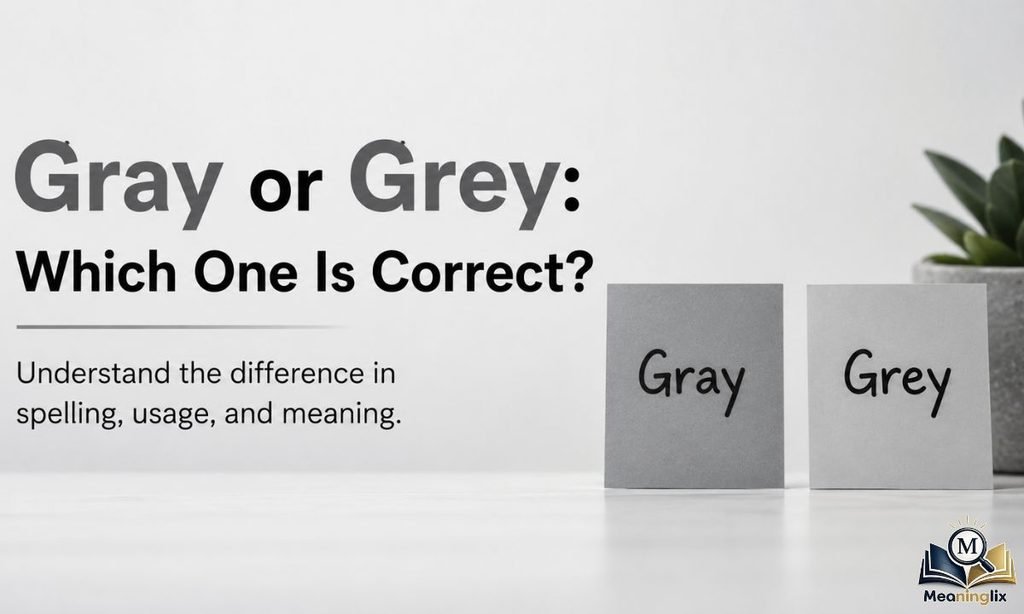
This is really a question of geography, not correctness. Here’s the rule that covers almost every situation:
- Gray → American English (United States)
- Grey → British English (United Kingdom, Australia, New Zealand, South Africa, and most Commonwealth countries)
A handy mnemonic makes this easy to remember: A is for America, so America spells it grAy. E is for England, so England spells it grEy.
Canada is the one exception worth flagging. Even though it’s in North America, Canadian English generally follows British spelling conventions, so “grey” is more common there too, especially in formal or government writing.
Why the Confusion Happens “Grey or Gray”
The mix-up isn’t really a spelling mistake, it’s a byproduct of how much American and British media blend together. Readers in the US regularly encounter “grey” in British books, shows, and brand names, and readers elsewhere see “gray” constantly in American content. Because both spellings look and sound identical, it’s easy to absorb one version without noticing which dialect it came from.
Dictionaries make this worse in a helpful way: most major dictionaries, including American ones, list both spellings as valid entries. That’s accurate, but it doesn’t tell you which one to actually use in your own writing, which is the part people usually want answered.
Quick Comparison Table “Grey or Gray”
| Term | Correct? | Dialect | Typical Use | Example |
| Gray | Yes | American English | US-based writing, US audiences | “The gray clouds rolled in before the storm.” |
| Grey | Yes | British English | UK, Australian, and Commonwealth writing | “The grey clouds rolled in before the storm.” |
Both rows are grammatically correct. The only variable is which English-speaking audience you’re writing for.
Rules for Choosing the Right Spelling
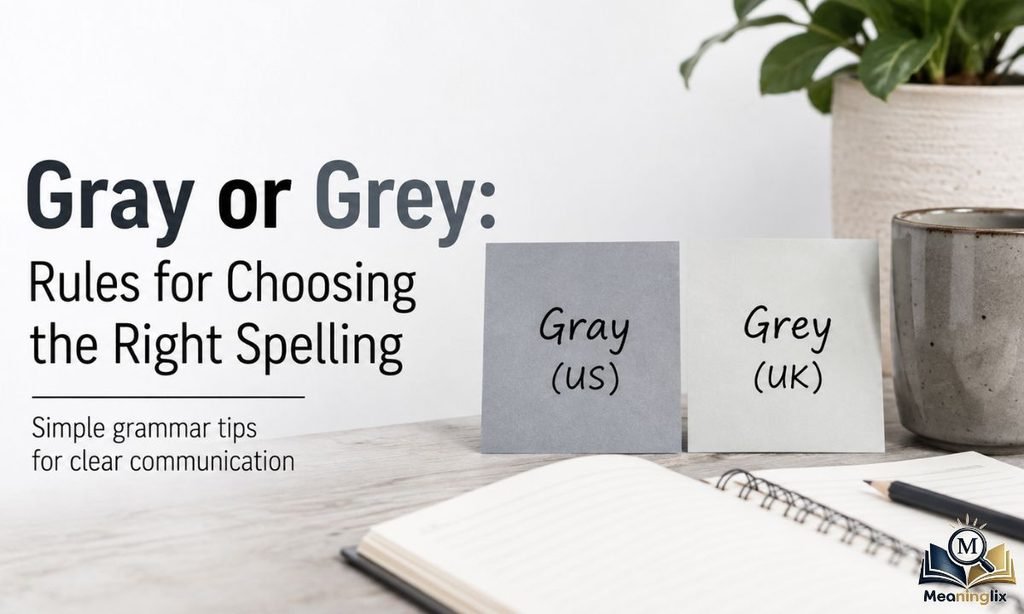
Use this simple decision process:
- Identify your audience. Writing for a US company blog, an American client, or a US-based publication? Use gray.
- Check your style guide. Many publications specify a preferred spelling regardless of the writer’s personal habit to follow it even if it isn’t your natural choice.
- Stay consistent. Once you pick a spelling, use it throughout the entire document. Switching between “gray” and “grey” in the same piece looks like an error, even though each spelling is individually correct.
- Watch for fixed exceptions. Some words and names never change spelling, no matter which dialect you’re writing in (more on this below).
Real-Life Examples “Grey or Gray”
American English (gray):
- “The recruiter wore a gray suit to the interview.”
- Text message: “just got a gray hoodie, it’s so soft”
- Academic paper: “The gray matter in the prefrontal cortex showed increased activity.”
British English (grey):
- “The recruiter wore a grey suit to the interview.”
- Text message: “just got a grey hoodie, it’s so soft”
- Academic paper: “The grey matter in the prefrontal cortex showed increased activity.”
Notice that the sentences are otherwise identical. The spelling is the only variable, and it’s dictated entirely by dialect, not by formality or context.
Common Mistakes People Make “Grey or Gray”
Mixing spellings within one document. Writing “gray” in one paragraph and “grey” three paragraphs later is the most frequent slip-up, especially in longer pieces where the writer forgets their earlier choice. The fix is simple: pick one spelling at the start and do a find-and-replace check before publishing.
Assuming British spelling is “more correct.” Some writers treat “grey” as the more proper or classic version because it looks more formal. It isn’t. American English simply standardized “gray” over time, and that standardization makes it fully correct for US writing, not a shortcut or a simplification.
Changing the spelling of fixed names. This is the mistake that trips up even careful writers. Certain proper nouns and specialized terms keep one spelling no matter which English dialect you’re using:
- Greyhound (the dog breed) always spelled with an “e,” even in American English.
- Earl Grey (the tea) is always “Grey,” never “Gray,” because it’s named after a British historical figure.
- Grey’s Anatomy, Fifty Shades of Grey, Grey Goose, Grey Poupon brand and title names keep whatever spelling their creators chose, regardless of the reader’s dialect.
- Grayling (the fish species) is always spelled with an “a.”
- Gray (the SI unit of radiation absorption) is always spelled with an “a” in scientific contexts, worldwide.
A simple way to remember the exception rule: regional spelling applies to the color itself, but proper nouns and brand names keep their own fixed spelling everywhere.
Practical Usage Guidance “Grey or Gray”
If you’re writing for a specific, known audience, the decision is easy: match the dialect. A blog aimed at US readers should use “gray” consistently; a piece written for a UK outlet should use “grey.”
If your audience is mixed or global, say, an international company website, pick one spelling and apply it uniformly across the entire site or document. Consistency matters more than which specific spelling you choose, since both are understood everywhere. Many international style guides default to American spelling simply because it’s widely recognized, but that’s a stylistic choice, not a grammar rule.
Related Forms and Expressions “Grey or Gray”
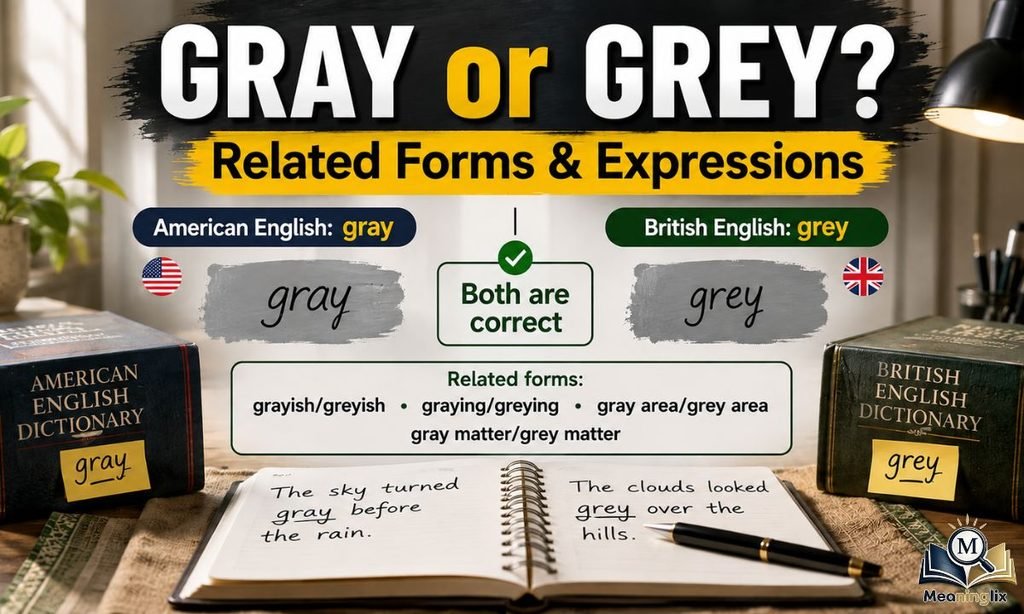
A few related points are worth knowing:
- Plural form: Both spellings pluralize the same way “grays” or “greys” used when referring to multiple gray-colored items or, informally, gray hairs.
- Comparative and superlative: As an adjective, you’ll see “grayer/greyer” and “grayest/greyest,” following the same regional pattern.
- Idiomatic uses: Phrases like “a gray area” (an ambiguous situation) or “gray matter” (referring informally to intelligence) follow the same regional spelling rule as the plain color word.
FAQs “Grey or Gray”
Is “grey” grammatically incorrect in American English?
No. It’s not grammatically wrong, but it’s considered non-standard for US writing. American style guides and publications expect “gray,” so using “grey” in that context may look inconsistent or read as a stylistic choice rather than an error.
Does Microsoft Word or Google Docs flag one spelling as wrong?
It depends on your language setting. If your document is set to “English (US),” spell-check will typically flag “grey” as nonstandard. If it’s set to “English (UK),” the reverse happens. Neither flag means the word is actually incorrect, it just means it doesn’t match your selected dialect.
Why is the dog breed always spelled “greyhound” in America?
Proper nouns and established names don’t follow the regional spelling rule that applies to ordinary words. “Greyhound” was fixed as a name long before American spelling standardized “gray,” so the breed name kept its original spelling everywhere, including the US.
Which spelling should I use for a global audience?
Choose one spelling and apply it consistently throughout your writing. American spelling (“gray”) is often the default for international content aimed at a broad audience, but either choice is acceptable as long as you don’t mix the two.
The Bottom Line “Grey or Gray”
“Gray” and “grey” are the same word for wearing two different regional outfits. If you’re writing for American readers, reach for gray. If you’re writing for British, Australian, or most other English-speaking audiences, use grey.
The only real rule to protect against a mistake is consistency and remembering that names like Earl Grey and greyhound never change, no matter which side of the spelling divide you’re on.

Alisha Lehmann is the founder and author of Meaninglix. She specializes in explaining word meanings, internet slang, abbreviations, grammar, and English expressions in simple, accurate language. Her goal is to help readers improve their vocabulary and communicate confidently through clear, well-researched, and easy-to-understand content.
2 thoughts on “Grey or Gray: The Powerful Spelling Guide 2k26”